
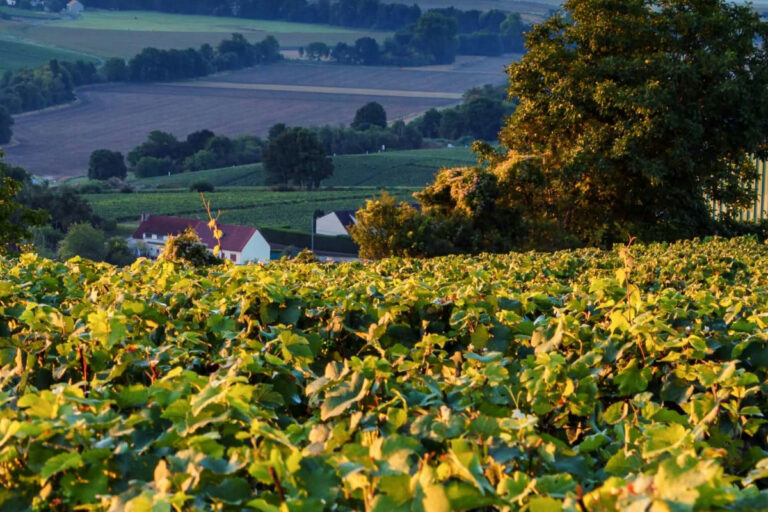
The majestic Champagne region, rich in winemaking traditions, is shaped by a unique terroir that gives its sparkling wines unparalleled elegance. The term ‘terroir’ encompasses a set of natural factors such as soils, climate, and topography, each playing a crucial role in characterizing the grapes used for champagne production. Champagne stands out for its exceptional geographical conditions. The soils are mostly composed of chalk, a limestone substrate dating back millions of years, formed from the skeletons of marine microorganisms. This chalk, both porous and rich in minerals, offers perfect drainage and retains moisture, providing the vines with optimal water supply even during dry periods. The Champagne climate is marked by a dual oceanic and continental influence. Winters are cold, summers are mild, and the intermediate seasons are often marked by relative humidity, conditions that favor the slow ripening of grapes, ensuring subtle aromas and remarkable acidity. The hilly geography of the region also aids in the good exposure of the vines to the sun, essential for photosynthesis and grape ripening. The gentle slopes allow better penetration of sunlight and better runoff of rainwater, thus limiting the risks of frost and excess moisture that could harm the health of the vines. The specifics of this Champagne terroir are found in every flute of champagne, whose aromatic complexity is unmatched. This richness offers wine lovers a unique sensory experience, while perfectly illustrating how geography can create exceptional wines.
The Champagne region is a true mosaic of diverse soils, each contributing to shaping the unique character of the grapes produced. Apart from the ubiquitous chalk, there are also marl, clay, and sandy soils in Champagne, each having a distinct influence on the vine and, by extension, on the taste and texture of the wine. Chalky soils, for example, are notorious for their ability to retain heat and reflect sunlight. This property is particularly beneficial during cool summer periods, helping the grapes reach optimal maturity. On the palate, champagnes from vines planted on chalky soils stand out for a lively minerality and acidic tension that bring freshness and length. In contrast, clay-limestone soils offer a perfect balance between clay and limestone. They share some characteristics with chalky soils in terms of drainage and moisture retention but add additional complexity due to the presence of clay. Champagnes from these soils tend to be richer and more structured, offering a broader aromatic palette with enhanced fruity and floral notes. As for marl soils, rich in clay and limestone, they promote slow and regular ripening of grapes. Champagnes from these terroirs are often generous on the palate with a creamy texture and remarkable depth. Marl brings nuances of ripe fruit and undergrowth aromas, giving the wines a particular complexity and elegance. By diversifying plantings on these different types of soils, Champagne winegrowers can create complex blended wines, making the most of each plot. These practices allow expressing the full potential of each grape variety—Pinot Noir, Pinot Meunier, and Chardonnay—each contributing its own signature to the final harmony of the champagne. Thus, studying the soils of Champagne reveals not only the richness of the terroir but also how each specific component directly influences the organoleptic characteristics of the champagne, offering a rich and nuanced tasting experience for aficionados worldwide.

The interaction between Champagne’s unique climate and its vineyards plays a fundamental role in producing wines that are both refined and balanced. Known for its cool and relatively humid climate, the region offers conditions conducive to the slow ripening of grapes, crucial for crafting high-quality champagnes. The Champagne climate is mainly influenced by its northern position and proximity to the sea. The harsh winters encourage the vine’s vegetative rest, allowing for optimal recovery before growth resumes in the spring. The mild summers ensure progressive grape ripening, while evenly distributed rainfall throughout the year is essential to maintain an ideal water balance. Seasonal variations, particularly spring frosts and summer storms, nonetheless present challenges that winemakers must overcome. Mastering these climatic conditions requires particular expertise, as weather hazards can affect the quality and yield of the harvests. However, these same challenges also give champagnes a unique temporal dimension, each vintage becoming a singular expression of its production year. The temperature variations between day and night (diurnal temperature ranges) are particularly beneficial in developing the complex aromatic profiles of the grapes. These fluctuations favor the synthesis of aromatic compounds and the preservation of natural acidity, two essential elements for producing elegant and balanced sparkling wines. This acidity, often cited as a signature of champagnes, gives them remarkable freshness and longevity. Furthermore, the ‘mirror’ effect of the ubiquitous chalk in the soil also plays a crucial role. By reflecting sunlight, chalk helps to achieve a more homogeneous maturation of the grape bunches and contributes to their photosynthesis, even in reduced light conditions. This phenomenon accentuates the aromas and ensures consistent grape quality regardless of climatic variations. Thus, the Champagne climate, in all its complexity, forms a perfect synergy with the specifics of the terroir to produce champagnes of unmatched finesse and diversity. Understanding this interaction allows connoisseurs to fully appreciate the essence of each flute, revealing the fascinating climatic story of each vintage.
While the terroir provides the intrinsic basis for champagne quality, it is the ancestral expertise of Champagne winemakers that allows its full potential to be expressed. Champagne’s winemaking tradition is rich in techniques and practices carefully passed down from generation to generation, ensuring the continuity and authenticity of the wines produced. Vine pruning, for example, is a crucial step that directly influences the plant’s vigor and grape quality. Champagne winemakers practice specific prunings, such as the Guyot or Chablis method, to control the fruit load and ensure optimal ventilation of the grape bunches. This practice is essential to prevent diseases and maximize grape exposure to sunlight. Harvesting, usually done by hand in Champagne, also demonstrates winemakers’ commitment to respecting and preserving grape quality. This method allows for rigorous selection of berries, harvesting only those that have reached ideal maturity. Moreover, manual harvesting minimizes the risk of mechanical damage to the bunches, thereby preserving their integrity until pressing. In terms of winemaking, mastering fermentation and blending techniques is an art in itself. Champagne producers use stainless steel or wooden vats to control fermentation temperature, which is crucial for preserving delicate aromas and natural acidity. The different plots and grape varieties are often vinified separately before being blended, allowing for the creation of balanced and complex cuvées that reflect the diversity of the terroir. The use of indigenous or selected yeasts also aligns with this logic of authenticity and respect for the terroir, influencing the final aromatic profile of the champagne. The foam generation, or second fermentation in the bottle, is a critical step where wines acquire their fine and persistent bubbles, a distinctive mark of champagne. Environmental preservation also plays a central role in Champagne’s viticultural practices. Many champagne houses have adopted sustainable viticulture approaches, incorporating agricultural techniques that respect biodiversity and the local ecosystem. Reduced pesticide use, responsible water management, and vine ground covering are some of the practices aimed at maintaining soil health and quality for future generations. Thanks to this harmonious combination of traditional and innovative techniques, Champagne winemakers succeed in capturing and sublimating the expression of the terroir in each flute, thereby offering a tasting experience true to the very essence of Champagne.

Champagne enthusiasts know that each flute is a symphony of flavors and aromas that tells a unique terroir story. Learning to recognize these nuances during tasting allows for a full appreciation of the subtleties of each cuvée. The first step of tasting is visual observation, which already reveals clues about the terroir. The color of the champagne can range from pale yellow to deep gold, suggesting grape maturity and soil type. A champagne from chalky soils, for example, often presents a lighter hue, signifying its minerality. Then, olfactory analysis allows you to delve into the heart of the aromas. Take the time to analyze the champagne’s nose. Champagnes from limestone soils often emit iodized, mineral, or oyster shell notes. In contrast, clay-limestone soils may offer fuller and richer aromas such as ripe fruits, white flowers, and sweet spices. A wine from marl may reveal undergrowth and mushroom aromas, evidencing the complexity of the underlying terroir. On the palate, the terroir characteristics become even clearer. The texture of champagne, often defined by the quality of its bubbles, can be linked to soil type and winemaking method. Fine and persistent bubbles are often a sign of chalky terroir that favors a good acid-alcohol balance. The tasting vocabulary then expands with terms like ‘creamy,’ ‘generous,’ or ‘lanky,’ each describing a specific sensation linked to the interaction between terroir and winemaker expertise. Finally, the overall balance and length in the mouth are valuable indicators. A champagne well-balanced between acidity, fruitiness, and minerality testifies to a perfect expression of the terroir. The aromatic persistence at the end of the mouth, often described as ‘mineral’ or ‘saline,’ may indicate a chalky origin, while a more structured and ample finish might suggest a clay-limestone soil. Taking note of these aspects during tasting will not only help you appreciate the wine’s quality but also understand the subtleties of the Champagne terroir. Whether you’re a novice or an experienced oenophile, each tasting is an invitation to a sensory journey through the hills and valleys of Champagne, revealing the well-kept secrets of this emblematic region.
Necessary cookies are absolutely essential for the website to function properly. This category only includes cookies that ensures basic functionalities and security features of the website. These cookies do not store any personal information.
Any cookies that may not be particularly necessary for the website to function and is used specifically to collect user personal data via analytics, ads, other embedded contents are termed as non-necessary cookies. It is mandatory to procure user consent prior to running these cookies on your website.