

The 19th century is a key period for the Champagne region, marked by the rise of major champagne houses. The historical and economic context of this era played a crucial role in this expansion. After the French Revolution, Champagne benefited from a renewed interest, especially from the rising bourgeoisie seeking to emulate the old aristocratic customs and turning to sparkling wine as a symbol of luxury and elegance. At the same time, the industrial revolution and its technological innovations offered new opportunities for producers. Advances in viticulture, oenology, and marketing allowed for significant improvements in production quality and quantity. Railways and steamships facilitated transportation, making national and international markets more accessible. Champagne houses like Moët & Chandon, Veuve Clicquot, and Bollinger seized these opportunities to establish themselves in the market. Taking advantage of increasing demand and their enhanced resources, these houses invested in vast vineyards, modernized their production techniques, and developed marketing strategies focused on quality and exclusivity.
In the 19th century, champagne houses became true pioneers in technological innovations. These advancements played a crucial role in the evolution of production and the consolidation of their position in the global market. The champagne method, although developed earlier, was perfected during this century to enhance the clarity and flavor of champagne. The riddling process, a technique for clarifying wine, was perfected by Veuve Clicquot. This method involves turning the bottles on inclined racks to gather sediment near the cork, facilitating its removal. Additionally, the innovation of the cork and the wire cage securing it ensured better preservation of the drink and reduced losses due to bottle explosions. Concurrently, viticulture experiments allowed for the selection of more resistant grape varieties and mastery of pruning techniques, increasing productivity and grape quality. The introduction of new equipment, like horizontal presses, optimized the pressing process, while advances in fermentation ensured better control of the biological processes involved. These innovations were not limited to technical aspects; they extended to the production and management of cellars. The first underground cellars emerged, offering ideal temperature and humidity conditions for wine aging. Thanks to these advancements, major champagne houses managed to not only increase their production but also ensure consistency in the quality of their products, cementing their reputation and success.
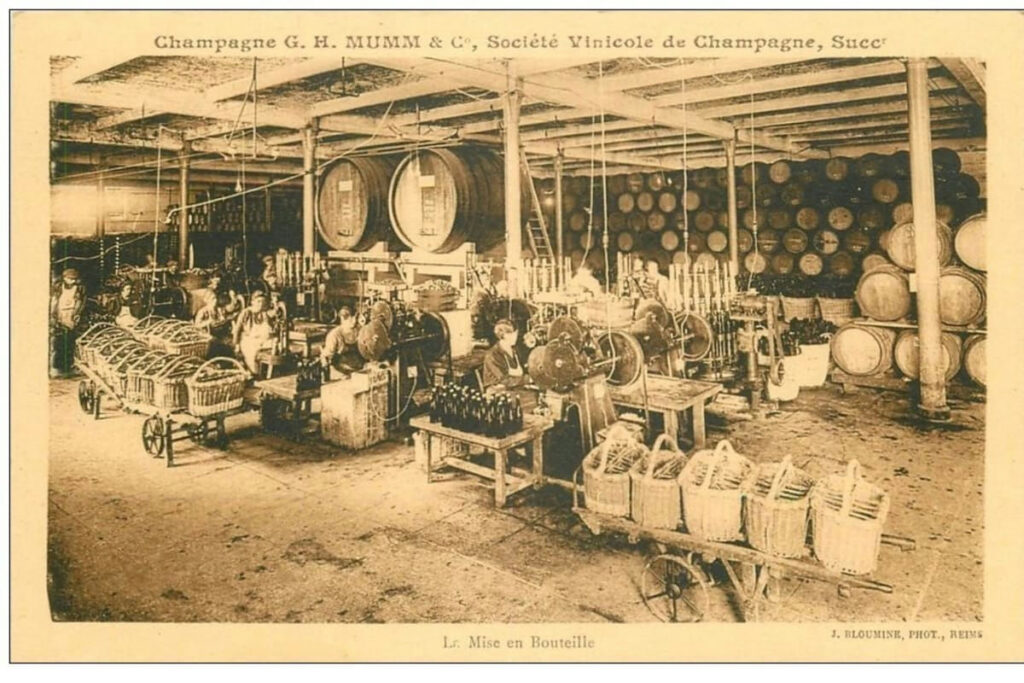
The consolidation of major champagne houses in the 19th century inevitably involved the conquest of national and international markets. To achieve this, these houses developed bold and well-thought-out growth strategies, emphasizing both marketing and logistics. From a marketing perspective, these houses created strong brands associated with iconic personalities and prestigious events. Moët & Chandon, for instance, became the official champagne of numerous European royal courts, associating itself with celebrations and grand moments of aristocratic life. This association with luxury and high social status served as a powerful lever for promoting their products. The world’s fairs and universal exhibitions of the 19th century also became essential showcases for these houses. These events allowed them to present their products to an international audience and win medals and quality certificates, strengthening their fame and credibility. Veuve Clicquot, for example, was very active in this field, participating in exhibitions across Europe and winning several awards that ensured its global renown. To ensure effective distribution, champagne houses set up sophisticated sales networks. They established trade offices in major European and American cities and worked with numerous local agents and distributors. This direct presence in target markets allowed them to better understand consumer tastes and needs, adapting their offerings accordingly. The opening of new markets, particularly in North America and Russia, was facilitated by improved transportation methods. The emergence of railways enabled faster and more reliable delivery, while steamships made transatlantic crossings safer and shorter. Champagne houses also took advantage of diplomatic relations to establish themselves in new territories, ensuring the continuation of their expansion beyond French borders.
The role of exports and diplomatic relations in the 19th century was crucial in the expansion of champagne houses. In an era when communications and transportation improved, business trips and commercial networks became indispensable tools for champagne houses wishing to conquer international markets. The first champagne shipments abroad began as early as the 18th century, but it was in the 19th century that these operations grew significantly. Champagne houses sent representatives to major European capitals to establish sales offices and forge commercial partnerships. For example, the Bollinger house founded branches in London and New York, increasing its visibility and facilitating product distribution in these strategic markets. Diplomatic relations also played an important role. Throughout the 19th century, French diplomacy used champagne as a tool of prestige and cultural influence. Official receptions and banquets organized by French embassies abroad were often occasions to present and taste the finest Champagne wines. This strategy not only contributed to product valorization but also promoted the French art of living. Moreover, participation in world exhibitions and international fairs, such as those in Paris, London, and Chicago, served as an international showcase for champagne houses. These events allowed them to win awards and medals, as well as establish valuable contacts and lasting commercial networks. Veuve Clicquot and Moët & Chandon, in particular, used these exhibitions to increase their visibility and conquer new markets. Finally, technological advances in the field of transportation, such as steamships and railways, greatly facilitated international trade exchanges. These innovations significantly reduced travel times and provided safer access to distant markets. Champagne houses were thus able to export their products to increasingly remote destinations, ensuring a global presence.
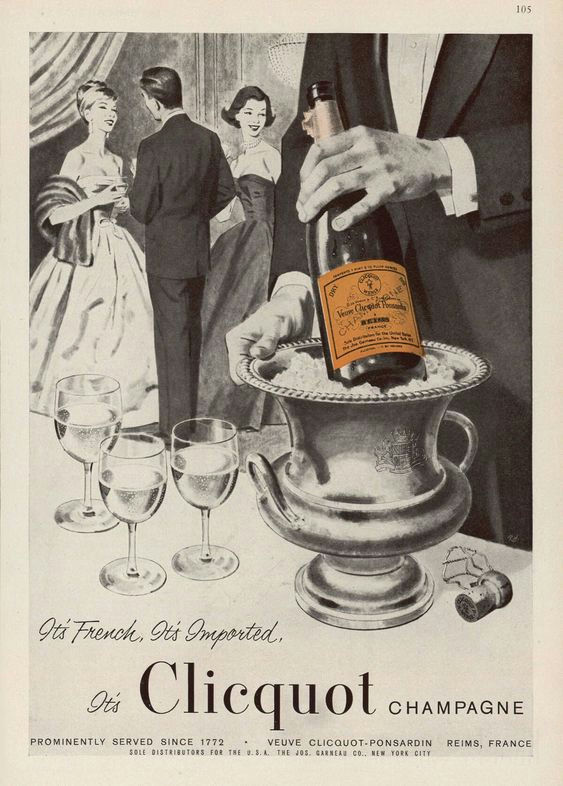
The legacy of the 19th century is still very present in the practices and traditions of contemporary major champagne houses. This period of growth and innovation laid the foundation for a culture of excellence and craftsmanship that endures to this day. While many industries are moving towards more modernized methods, Champagne strikes a balance between tradition and modernity. Techniques perfected in the 19th century, such as riddling, are still widely used, though often integrated with modern innovations. For example, the manual riddling process has largely been automated by machines called Gyropalettes, enabling greater efficiency while maintaining the quality of the final product. Similarly, historical underground cellars are still used for aging bottles, benefiting from a unique microclimate that replicates the ideal conditions developed centuries ago. The branding strategies developed in the 19th century are also still relevant. Most major houses have retained their historical labels and continue to capitalize on their prestigious heritage. Houses like Bollinger and Veuve Clicquot perpetuate their commitment to quality and exclusivity, often with limited editions, to maintain and nurture their luxury image. Internationally, champagne houses continue to utilize well-established distribution networks and benefit from the diplomatic and commercial relations inherited from the 19th century. Champagne enjoys a globally recognized image of excellence, inherited from its prestigious history and past successes. Regular participation in international events, such as world fairs and wine exhibitions, remains a common practice for these houses. Finally, innovation remains at the heart of the strategy of major champagne houses. While respecting traditional methods, they invest in research and development to continually improve their products. Whether through the development of new vintages, the improvement of sustainable viticulture techniques, or the implementation of environmentally friendly oenological practices, 21st-century champagne houses remain true to their pioneering spirit while adapting to contemporary challenges. Thus, although the 19th century was a period of profound transformations, the legacy of this era continues to shape and inspire the modern practices of major champagne houses, ensuring their success and prestige for future generations.
Necessary cookies are absolutely essential for the website to function properly. This category only includes cookies that ensures basic functionalities and security features of the website. These cookies do not store any personal information.
Any cookies that may not be particularly necessary for the website to function and is used specifically to collect user personal data via analytics, ads, other embedded contents are termed as non-necessary cookies. It is mandatory to procure user consent prior to running these cookies on your website.