
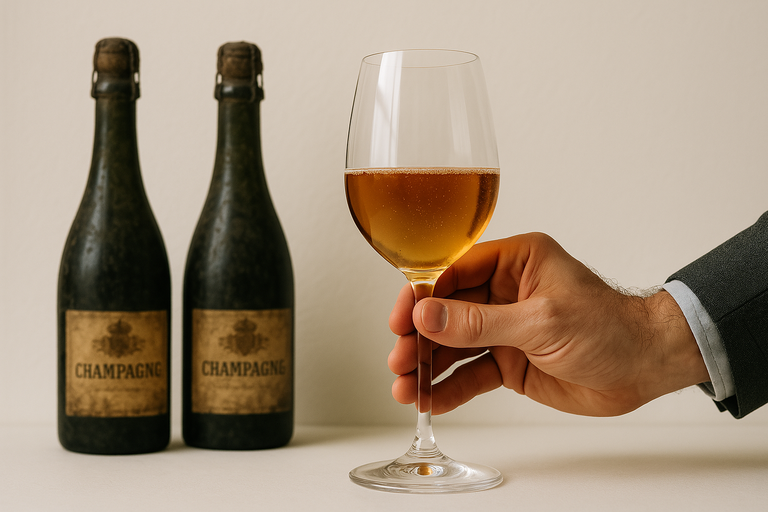
Aging champagne is a delicate and meticulous process that enhances its aromas and flavors. Unlike traditional sparkling wines, champagnes that benefit from long aging, particularly vintage champagnes, require special attention from their creation. When the wine is bottled, it begins a secondary fermentation through the addition of sugar and yeast. This process, called ‘prise de mousse’, is essential for developing the fine bubbles characteristic of champagne. But it is during aging on lees, in the cellars, that the champagne matures and becomes enriched. The dead yeasts, left in the bottle after the ‘prise de mousse’, play a crucial role in releasing complex aromatic compounds over the years. This maturation process is known as autolysis. Long aging allows the aromas to develop and become deeper and more complex. Vintage champagnes enjoy a much longer time on lees than non-vintage champagnes, often exceeding five years and sometimes even several decades. This results in wines of unique richness and elegance. It is also important to note that cellar aging brings remarkable stability to champagne. Temperature and light fluctuations can affect wine quality, which is why Champagne cellars offer ideal conditions with a constant temperature and perfect darkness. These factors, combined with the expertise of cellar masters, ensure the production of extraordinary champagnes that last through the years without losing their luster. This journey through time, orchestrated by prolonged aging, gives vintage champagnes a unique sensory signature that passionate enthusiasts eagerly seek. Discovering these aging secrets is an initiation into an ancient art, that of enhancing an already exceptional wine to reach new heights of refinement and complexity.
Champagnes undergoing long aging develop a unique aromatic and taste profile that clearly distinguishes them from younger champagnes. This sensory transformation is the result of a slow evolution during which the wine interacts with residual yeasts, sugars, and acids. The aromas of aged champagnes are often described as more complex and evolved. You will find notes of dried fruits such as walnut, almond, and hazelnut, gradually replacing fresh fruity aromas. Prolonged aging can also reveal hints of honey, brioche, toasted bread, and even truffle. These aromas come from compounds released by yeasts during autolysis and are a striking feature of well-matured vintage champagnes. In terms of flavors, aged champagnes offer distinctive richness and depth. The fruity elements present in young champagnes blend into a complex taste where the initial acidity softens, allowing for rounder and more lasting flavors on the palate. Mineral notes may also become more pronounced, adding an extra dimension to the tasting experience. Prolonged aging also influences the texture of champagne. The bubbles, initially very fine and lively, can become more delicate and less effervescent, giving the wine a subtle softness and creaminess. This textural evolution is often perceived as a mark of sophistication and maturity, making the tasting even more enjoyable for informed connoisseurs. But how to recognize these aromas and flavors at their true value? This requires some concentration and gradual familiarity with the peculiarities of different vintages. Each sip should be savored slowly, allowing time for the aromas to unfold and the flavors to blossom on the palate. Ultimately, long-aged champagnes offer a sensory experience quite different from young champagnes. This aromatic and taste complexity turns each tasting into a unique and precious moment, where the wine’s history is told through its notes matured over time.

Tasting a champagne that has undergone long aging requires some sensitivity and specific techniques to appreciate all its subtleties. Here are a few tips to guide you in savoring these precious elixirs like a true expert. Serving temperature: Unlike younger champagnes, aged vintage champagnes benefit from a slightly higher serving temperature, around 10 to 12°C. This temperature allows the complex aromas to be revealed without being masked. Choice of glass: Although champagne flutes are commonly used, white wine glasses may be more appropriate for aged champagnes. They offer a larger surface area for interaction with air, helping to reveal the full aromatic richness of the wine. Let the bubbles unfold in the glass before bringing your nose to its rim to capture the entire aromatic palette. Observation: Take the time to observe the color of the champagne. Aged champagnes often exhibit deeper hues, ranging from pale gold to amber. This color is a testament to the long oxidation and maturation process to which the wine has been subjected. Olfactory tasting: After observing the wine, gently tilt the glass and smell it. The first aromas to emerge are often the most persistent and elaborate. Take a few moments to identify the different aromatic layers. You might perceive notes of dried fruits, brioche, honey, or even terroir. Taste tasting: Take a small sip and let the wine unfold in your mouth. Be surprised by the creamy texture, a hallmark of well-aged champagnes, and the evolution of flavors during tasting. Try to distinguish the nuances between dried fruits, toasted touches, and mineral traces, revealing the complex harmony of this nectar. Food and wine pairings: The richness of aged champagnes pairs wonderfully with more sophisticated dishes, such as foie gras, cooked oysters, roasted poultry, or even aged cheeses. Their aromatic and taste complexity can elevate a meal and create an unparalleled gastronomic experience. Patience and repetition: Tasting aged champagnes is an art that perfects over time and experience. Do not be discouraged if you do not immediately identify all the subtleties. Each tasting is a new discovery and contributes to refining your palate. By following these steps, you will be able to taste and appreciate aged champagnes more deeply. Beyond technical advice, the key lies in personal appreciation and passion. Each bottle is the result of a complex and lengthy process deserving all your attention and respect. So, raise your glass and let the past resonate through each delicate bubble of your vintage champagne.
Necessary cookies are absolutely essential for the website to function properly. This category only includes cookies that ensures basic functionalities and security features of the website. These cookies do not store any personal information.
Any cookies that may not be particularly necessary for the website to function and is used specifically to collect user personal data via analytics, ads, other embedded contents are termed as non-necessary cookies. It is mandatory to procure user consent prior to running these cookies on your website.