
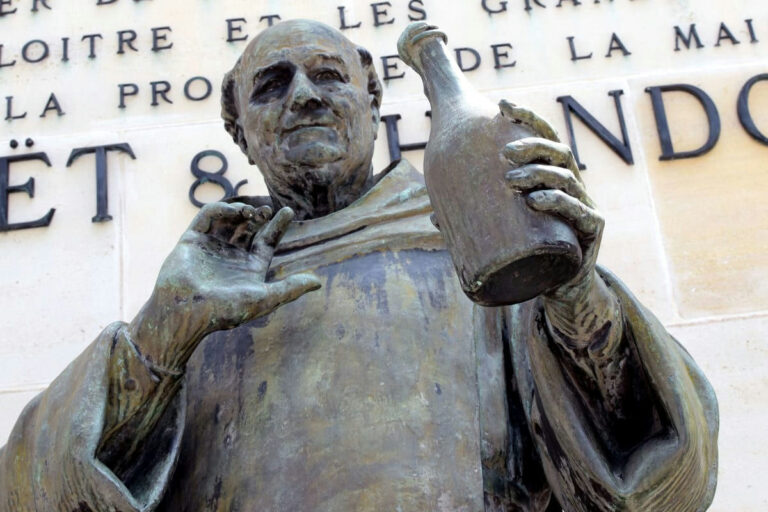
The history of champagne, this sparkling beverage synonymous with celebration and prestige, finds its roots in the 17th century, thanks to the work of a Benedictine monk named Dom Pierre Pérignon. Far from being a mere winemaker, Dom Pérignon is considered a pioneer whose innovations have indelibly marked viticulture. Born in 1638, he joined the Hautvillers Abbey, located in the heart of the Champagne region. It was there that Dom Pérignon dedicated his life to improving the quality of the wines produced. One of Dom Pérignon’s most significant contributions to oenology is the introduction of winemaking techniques to reduce the risks of spontaneous secondary fermentation, an unwanted phenomenon causing the refementation of wines in bottles. He implemented rigorous practices and a meticulous attention to detail, thus streamlining the winemaking process and making each bottle a product of sophistication and finesse. Furthermore, Dom Pérignon is often credited with inventing the champagne method or traditional method, although historical evidence on this point is partially contested. Regardless, the importance of his legacy lies not only in this method but also in all the innovations he introduced – innovations that laid the foundations for champagne production as we know it today. Dom Pérignon’s dedication to perfecting viticultural techniques made Hautvillers Abbey a center of oenological research and innovation. His scientific and experimental approach, although seemingly simple, remains a model of efficiency and rigor. The monk paid particular attention to details, from the care of the vines to the method of pressing the grapes. Each phase of the production process was optimized to create a wine of unmatched quality. Thus, Dom Pérignon left a legacy that goes far beyond the borders of Hautvillers Abbey. He established standards and practices that still endure today, making him an emblematic figure of global oenology. His contribution extends not only to the technical and scientific aspects but also to the art of winemaking, which continues to inspire winemakers worldwide.
Dom Pérignon’s contributions to the art of winemaking extend beyond his place of residence, spreading well beyond due to his innovative techniques. Hautvillers Abbey, under his direction, became a laboratory for viticultural experimentation, where each method, each grape variety, each technique was evaluated and refined to achieve perfection. One of the most revolutionary aspects of Dom Pérignon’s work was his approach to blending grape varieties. Unlike most of his contemporaries, who often opted for single-variety wines, Dom Pérignon quickly understood the benefits of blending. By selecting grapes from different vines and blending them, he managed to balance the flavors, acidity, and structure of the wine, creating a final product of greater complexity and harmony. This meticulous blending allowed the wine to possess unparalleled depth and consistency. Care for vineyard cultivation was also crucial for Dom Pérignon. He introduced methods to protect the grapes from adverse weather and pests, ensuring a healthier and better-quality harvest. His gentle pressing technique allowed the extraction of grape juice without compromising the delicate flavors, thus avoiding colored and overly tannic juices that would undermine the wine’s finesse. Another key aspect of his work was wine clarification. Dom Pérignon used natural methods to stabilize the wine, notably by avoiding excess turbulence during transfers and ensuring controlled fermentation. This mastery of the clarification process made it possible to obtain a clear and brilliant wine free of deposits and impurities. Finally, the airtight sealing of bottles to prevent carbon dioxide leaks and the use of cork stoppers is another innovation often attributed to Dom Pérignon. By ensuring perfect sealing, he guaranteed the conservation of bubbles, an essential element of champagne. This technique, coupled with stronger bottles, revolutionized the storage and transport of sparkling wine. These pioneering techniques introduced by Dom Pérignon not only marked a decisive step in the history of champagne but also laid a solid foundation on which current production still relies. Each step was meticulously thought out and implemented to maximize the quality of the final product, a principle that remains fundamental in modern viticulture.
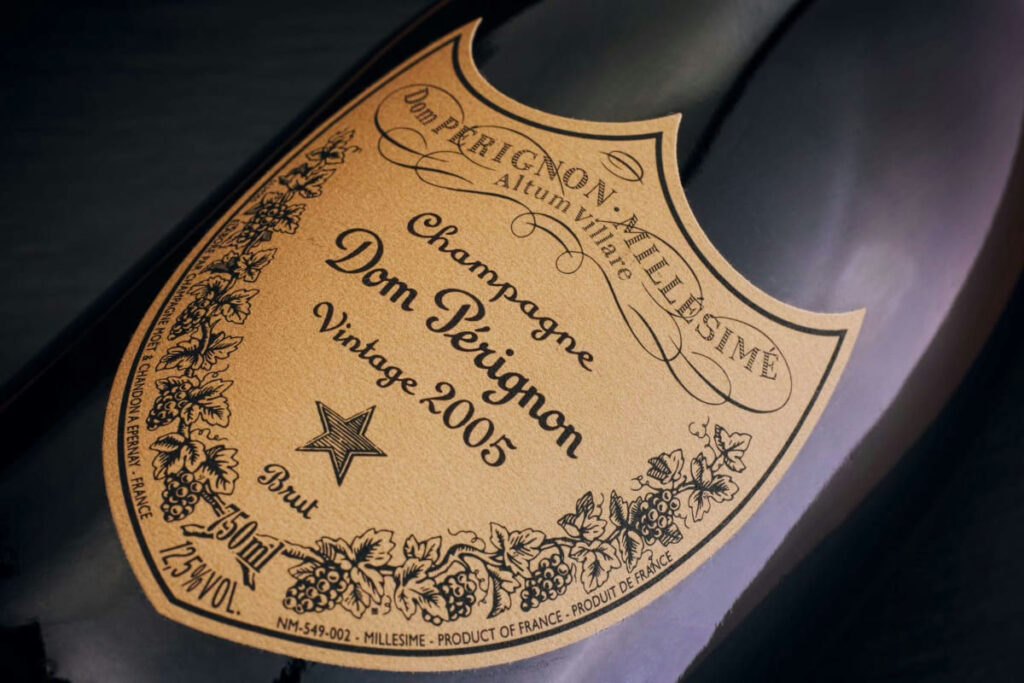
While Dom Pérignon’s work was a cornerstone for the development of modern viticulture, some of his practices continue to govern contemporary champagne production. The longevity of the methods initiated by the famous monk attests to their effectiveness and relevance, even in the face of technological advances. Grape blending, one of the pillars of the Dom Pérignon method, remains a crucial phase in champagne production. Contemporary champagne houses continue to carefully select grapes from different parcels to produce balanced and complete wines. The know-how in the art of combining several grape varieties is passed down from generation to generation, ensuring continuity and harmony in the typical taste of champagne. Pressing techniques are also inherited from the father of modern champagne. Even today, renowned houses use traditional presses or pneumatic presses that respect the principle of gentleness imposed by Dom Pérignon. The idea remains to obtain the purest possible grape juice without crushing the skins and seeds, in order to preserve the wine’s finesse and elegance. Winemaking and clarification, which were critical stages for Dom Pérignon, still follow the principles he established. Controlled fermentation to stabilize wines and careful clarification to remove impurities are practices commonly applied in modern champagne cellars. Moreover, the bottle fermentation techniques originally developed by Dom Pérignon are still relevant and are the cornerstone of the champagne method. Cork stoppers and reinforced bottles, introduced by Dom Pérignon, remain unchanged for their reliability and ability to preserve the wine’s integrity. While modern materials are sometimes used for practical reasons, the technical foundations laid by Dom Pérignon continue to define quality and conservation standards. Emphasis on the quality of the grapes is another crucial aspect perpetuated since Dom Pérignon’s time. Champagne-region winegrowers still use traditional cultivation and vine protection techniques, although often enhanced by modern agronomic advances. Manual harvesting, necessary to pick grapes by hand and avoid damaging them, is an ancestral practice that endures, ensuring top-quality grapes. Thus, although modern techniques have complemented and sometimes optimized these ancestral methods, Dom Pérignon’s imprint remains indelibly rooted in contemporary production. These centuries-old practices are a testament to a successful alliance between tradition and innovation, ensuring that each bottle of champagne carries within it the legacy of this oenological pioneer.
Despite the importance of Dom Pérignon’s legacy, technological evolution in the field of viticulture and oenology has enriched and optimized traditional methods. This fusion between the old and the new has given rise to a champagne whose quality continues to improve while being faithful to the principles established by the Benedictine monk. Technological innovation has profoundly transformed vineyard management. Drones and satellites, for instance, are increasingly used to monitor vine health, detect diseases, and assess grape maturity. These tools allow winemakers to make more informed and precise decisions, ensuring optimal harvests. Although these technologies were only available a few decades ago, their use respects the spirit of precision and care dear to Dom Pérignon. Advances in grape pressing have also reinforced traditional methods. Modern presses, such as pneumatic presses, allow finer control of the pressure exerted on the grapes, minimizing the risk of extracting undesirable compounds. This preserves the juice’s integrity and purity while respecting the gentleness philosophy initiated by Dom Pérignon. In terms of winemaking, modern temperature and fermentation control technologies have revolutionized the production method. Stainless steel tanks equipped with thermal regulation systems ensure stable and controlled fermentation, minimizing the risks of aromatic deviations and guaranteeing consistent quality. Although these equipment did not exist in Dom Pérignon’s time, their use allows for the realization of his aspiration for perfection. Clarification, another key step, has also benefited from modern innovations. Filtration and centrifugation techniques enable more effective removal of impurities without altering the wine’s organoleptic properties. Furthermore, cold stabilization methods and the use of new, less intrusive adjuvants ensure a more natural and respectful clarification of the product. Bottling and packaging have also evolved, with crown caps for secondary fermentation and technical closures as alternatives to traditional corks used for certain stages or specific bottles. However, it is interesting to note that these innovations have not entirely supplanted traditional methods, but rather complemented them, multiplying the possibilities of refining the wine. Finally, innovations in marketing and distribution have also profoundly impacted the champagne sector. E-commerce platforms, environmentally friendly packaging techniques, and digital traceability tools now allow champagne houses to reach a global audience while respecting the quality and authenticity standards inherited from Dom Pérignon. Thus, far from sacrificing this legacy to modernity, contemporary champagne production succeeds in marrying tradition and innovation, ensuring the perpetuation of ancient know-how while exploiting technological advances to produce ever more refined and appreciated wine.
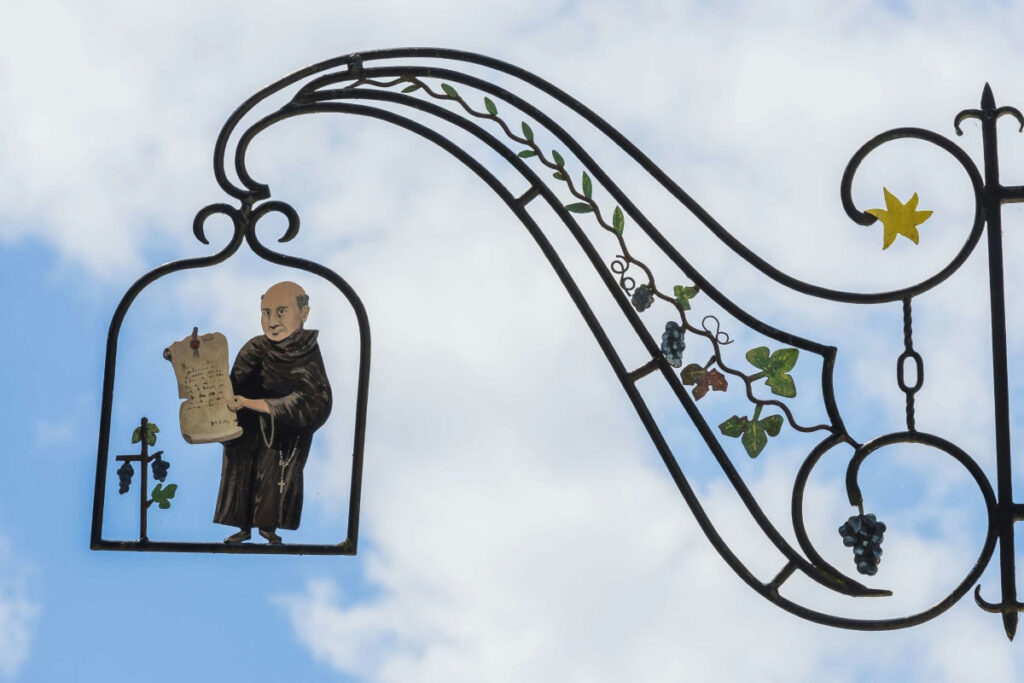
Dom Pérignon’s influence on the champagne industry goes far beyond the borders of winemaking. His innovations not only shaped winemaking techniques but also had a lasting impact on the global wine economy and culture. Economically, the rise of champagne, partly initiated by Dom Pérignon’s methods, transformed the Champagne region into one of the most prosperous in France. Today, champagne represents a major economic sector, generating billions of euros in revenue each year. Local winegrowers, as well as major champagne houses, directly benefit from this boom, creating thousands of jobs through production, distribution, and marketing. The champagne phenomenon transcends merely economic considerations, deeply embedding itself into global culture. Synonymous with luxury and celebration, champagne has become an emblem of festivity and memorable moments. This reputation is partly attributable to the consistent quality and sophistication of the product, characteristics directly resulting from the methods and standards established by Dom Pérignon. His quest for perfection and dedication to making exceptional wines have left an indelible mark on the perception and appreciation of champagne worldwide. The cultural impact can also be seen in how champagne has permeated the arts, literature, and even diplomacy. Many writers, artists, and statesmen have celebrated and praised this beverage over the centuries, contributing to its aura and prestigious reputation. From Oscar Wilde to James Bond, champagne occupies a place of choice in the collective imagination, embodying refinement and joy of living. Beyond the economic and cultural aspects, it is important to mention the lasting influence of Dom Pérignon’s methods on oenological research and viticulture education. The techniques he perfected, such as grape blending and bottle fermentation, are taught in viticulture and oenology schools worldwide. His name is associated with scientific rigor and innovation, inspiring generations of winegrowers and winemakers. The wine tourism industry in Champagne also greatly benefits from Dom Pérignon’s aura. Wine enthusiasts and tourists flock to this historic region to discover the secrets of champagne production and visit iconic sites like Hautvillers Abbey. This type of tourism not only enriches the local economy but also reinforces the cultural and historical ties that connect visitors to Dom Pérignon’s legacy. Finally, it is crucial to recognize the environmental impact and sustainable practices inspired by Dom Pérignon’s principles. Modern viticulture in Champagne increasingly tends towards environmentally friendly methods, partly due to the philosophy of care and respect for nature promoted by the Benedictine monk. This sustainable approach ensures not only product quality but also the preservation of the viticultural ecosystem for future generations. Dom Pérignon’s legacy thus extends far beyond his technical innovations. It is rooted in the economy, culture, education, tourism, and environmental practices of the Champagne region and the global wine industry. The methods he perfected continue to inspire and guide, ensuring that each flute of champagne will forever carry a part of his invaluable contribution.
Necessary cookies are absolutely essential for the website to function properly. This category only includes cookies that ensures basic functionalities and security features of the website. These cookies do not store any personal information.
Any cookies that may not be particularly necessary for the website to function and is used specifically to collect user personal data via analytics, ads, other embedded contents are termed as non-necessary cookies. It is mandatory to procure user consent prior to running these cookies on your website.