
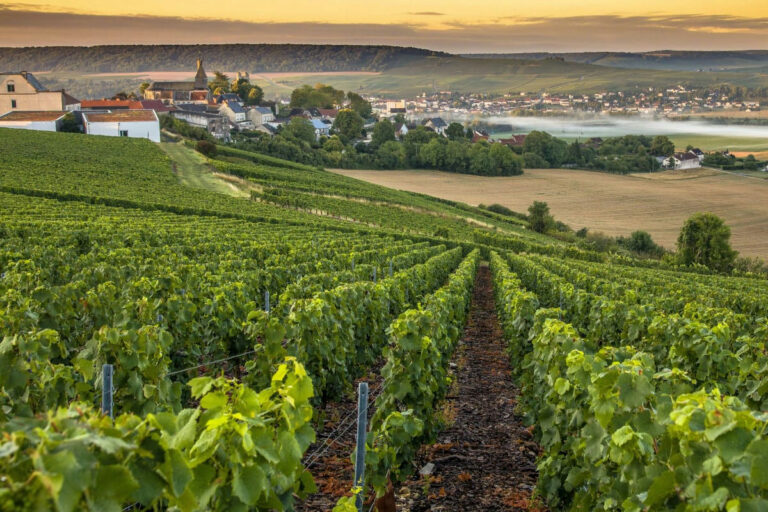
The champagne industry, an iconic emblem of French winemaking tradition, is at a decisive turning point in its history. Known and admired worldwide, the Champagne region has managed to preserve traditional production methods while adapting to modern market demands. Currently, it faces a landscape filled with both challenges and opportunities. The champagne market, dominated by prestigious brands, has recently shown resilience despite fluctuating global economic conditions. The demand for this sparkling wine remains driven by an image of luxury and celebration associated with this unique product. However, the market is not immune to economic cycles and changing consumption, notably marked by a shift in consumer tastes and expectations. The COVID-19 pandemic particularly highlighted the industry’s vulnerability to global events. Sales saw a significant drop during lockdowns and restrictions that limited celebrations and social events. Nonetheless, the recovery demonstrated the strong appeal of champagne with a rapid return to pre-crisis sales levels. Export also plays a crucial role in the current health of the industry. Foreign markets, particularly in the United States, Japan, and China, represent a significant portion of revenues. However, economic fluctuations and geopolitical tensions can quickly impact these markets, forcing producers to diversify their outlets. The growing competition from other sparkling wines, particularly Italian Prosecco and Spanish Cava, poses another significant challenge. These products offer a more affordable alternative and attract an increasingly diverse customer base. To remain competitive, the champagne industry must not only capitalize on its reputation and superior quality but also explore new marketing and distribution strategies. In sum, the current state of the champagne industry is marked by a delicate balance between tradition and innovation, timeless quality, and adaptability. To continue to thrive, it must carefully navigate a complex and changing global environment.
The evolution of consumption and production habits of champagne is a key dynamic for understanding the future of this prestigious industry. The new trends reflect both the continuity of centuries-old traditions and the integration of necessary changes to adapt to a constantly changing world. On the consumption side, several trends are clearly emerging. Firstly, there is a growing demand for more diverse champagnes. Consumers are now seeking specific cuvées from particular terroirs and are increasingly informed about differences between vintages, dosages, and production methods. The interest in organic and biodynamic champagnes illustrates this change in attitude, with a heightened focus on authenticity and sustainability. Champagne consumption is also experiencing a loss of seasonality. Once mainly consumed during end-of-year festivities and special events, champagne is increasingly becoming a beverage of choice for various occasions throughout the year. Aperitifs, brunches, and even informal dinners are seeing champagne bottles pop more often, translating to a more natural integration of this beverage into the daily lives of wine enthusiasts. On the production side, the industry is observing several significant trends. Producers are heavily investing in research and innovation to improve the quality and consistency of their cuvées. The modernization of cellars, the use of new winemaking techniques, and more scientific vineyard management meet the growing demands of the market. The focus on sustainability also influences production practices. Organic and biodynamic farming is gaining ground, with more and more estates adopting these environmentally friendly methods. This often involves a commitment to reducing the carbon footprint, from vineyard to bottle, by using more eco-friendly processes and optimizing logistics. Finally, the personalization of offers plays an increasing role. Producers are offering more individualized experiences, from private cellar visits to tailored tasting workshops. This approach aims to strengthen the bond between producer and consumer, allowing each to appreciate not only the final product but also the expertise and history it embodies. In this context, the emerging trends in champagne consumption and production illustrate an industry in constant evolution, seeking to blend tradition and innovation to appeal to wine enthusiasts worldwide while addressing contemporary challenges.

The champagne industry is not lagging when it comes to embracing technological innovations and refining its viticultural practices. To maintain their leading position in the global sparkling wine market, champagne producers are turning to cutting-edge technologies and innovative cultivation methods while preserving the traditional essence and expertise that make this wine region renowned. One of the notable innovations involves the use of technology in vineyard management. Precision agriculture, using sensors, drones, and geolocation systems, enables winegrowers to monitor and manage their vineyards with increased accuracy. These tools allow for detailed data collection on soil conditions, humidity, vine growth, and other key factors influencing grape quality. As a result, producers can optimize interventions, whether it’s irrigation, fertilization, or pest control, reducing the use of chemicals and preserving the environment. In cellars, technology also plays an increasingly important role. Controlled-temperature fermentation tanks, advanced filtration systems, and other modern equipment allow oenologists to better control the winemaking process. These tools ensure greater regularity and quality of the final product while respecting the traditional methods of the second fermentation in the bottle, a hallmark of champagne. Clonal selection and grape variety research programs are also areas of viticultural innovation. Researchers are working on vine clones that are not only resistant to certain diseases but also capable of adapting to climate change. Champagne, with its iconic grape varieties such as Chardonnay, Pinot Noir, and Pinot Meunier, benefits from these advances to ensure stable and quality production despite potentially increasingly unpredictable climatic conditions. Furthermore, viticultural practices are evolving to include more sustainable cultivation techniques. Permaculture, integrated viticulture, and other agroecological approaches are gaining popularity. These methods help maintain soil fertility, preserve biodiversity, and reduce the ecological footprint of vineyards. Certification initiatives for organic and biodynamic practices are also on the rise, responding to a growing consumer demand for more environmentally friendly products. Thus, technological innovations and modern viticultural practices are redefining the champagne industry. By incorporating these advances, producers can continue to offer products of exceptional quality while adopting a more responsible and sustainable approach, ensuring a promising future for this iconic beverage.
The champagne industry, while embodying luxury and refinement, does not escape the environmental challenges affecting the entire planet. Increasing awareness of the environmental impacts associated with winemaking pushes Champagne stakeholders to adopt more sustainable practices and integrate ecological initiatives into all aspects of their production. One of the major environmental challenges for the Champagne industry is climate change. The Champagne region, with its specific climatic conditions, is particularly sensitive to temperature fluctuations. Spring frosts, summer heatwaves, and irregular rainfall affect the quality and quantity of harvests. In response to these challenges, winegrowers are implementing adaptation strategies. This includes optimizing water management, using cover crops to protect soils, and promoting the genetic diversity of grape varieties to ensure resilience to climatic uncertainties. Reducing the carbon footprint is another major issue. The production and distribution of champagne, with its energy-intensive processes and international transportation, significantly contribute to greenhouse gas emissions. Many domains have taken steps to become more eco-friendly. The use of renewable energy, the reduction of pesticide use, and the adoption of exemplary recycling and waste management practices are spreading throughout the region. Biodiversity is also a central aspect of ecological concerns. The intensification of viticulture in past decades has often led to the degradation of local ecosystems. To counteract this phenomenon, champagne producers are implementing initiatives to protect and promote biodiversity in and around their vineyards. This includes planting hedges, installing bird and bat nesting boxes (natural predators of pests), and maintaining uncultivated areas to preserve natural habitats. Environmental certifications such as Sustainable Viticulture in Champagne (VDC), Organic Agriculture (AB), and biodynamic farming are on the rise. These labels ensure that viticultural practices adhere to strict standards on environmental protection, worker health, and product quality. Many winegrowers see these certifications not as constraints but as opportunities to stand out in a market increasingly aware of environmental challenges. In conclusion, environmental challenges and sustainability represent both challenges and opportunities for the champagne industry. By adopting environmentally friendly practices, producers can not only contribute to planet preservation but also meet the expectations of modern consumers, who are increasingly attuned to ecological issues. This transition to sustainable viticulture is essential to ensure a lasting future for this iconic sparkling wine.

The champagne industry, despite its longevity and worldwide renown, is not immune to economic and global challenges. International economic conditions, fluctuating trade policies, and market volatility are factors that directly or indirectly influence the health of this prestigious sector. Understanding and anticipating these challenges is essential to ensure the future resilience and growth of the industry. Global economic fluctuations are a significant challenge. Recession periods like the financial crisis of 2008 or the COVID-19 pandemic have shown how vulnerable the champagne industry is to economic cycles. During these times, consumers are more likely to cut discretionary spending, affecting the demand for luxury products like champagne. Market diversification and customer segments can address this economic vulnerability, allowing declines in certain areas to be offset by increases in others. Trade tensions and customs policies represent another major challenge. Trade wars, sanctions, and protectionist policies can significantly hinder exports, representing a significant portion of the champagne industry’s revenues. For example, tariffs imposed by some countries on French wine and spirits have had a notable impact on exports. Producers must continuously navigate this uncertain landscape, seeking to secure new markets while strengthening their presence in existing markets. Global competition also increases pressure on champagne producers. Italian Prosecco, Spanish Cava, and now sparkling wines from countries like the United States and England offer often cheaper and more accessible alternatives. This competition pushes the champagne industry to bolster its positioning by highlighting its superior quality, unique terroir, and rich history. For this, innovation in products, offer diversification, and an effective marketing strategy are crucial. Supply chain challenges cannot be ignored. Disruptions in global logistics chains, caused by events like pandemics, natural disasters, or trade blockages, can create bottlenecks and increase production and distribution costs. Champagne producers must seek ways to enhance the resilience of their supply chains, including through strategic partnerships and adopting technologies to improve traceability and logistical efficiency. Finally, evolving environmental and social regulations impose new constraints. Sustainability standards and corporate social responsibility (CSR) are increasingly stringent, pushing producers to adopt more virtuous practices. While these requirements may incur additional costs in the short term, they can also pave the way for long-term opportunities by meeting consumer expectations and enhancing brand image. In conclusion, economic and global challenges are numerous and complex for the champagne industry. However, with a proactive and adaptable approach, producers can navigate these tumultuous waters. Emphasizing quality, innovation, sustainability, and a fine understanding of global market dynamics will allow the champagne industry to continue shining on the international stage.
Necessary cookies are absolutely essential for the website to function properly. This category only includes cookies that ensures basic functionalities and security features of the website. These cookies do not store any personal information.
Any cookies that may not be particularly necessary for the website to function and is used specifically to collect user personal data via analytics, ads, other embedded contents are termed as non-necessary cookies. It is mandatory to procure user consent prior to running these cookies on your website.