
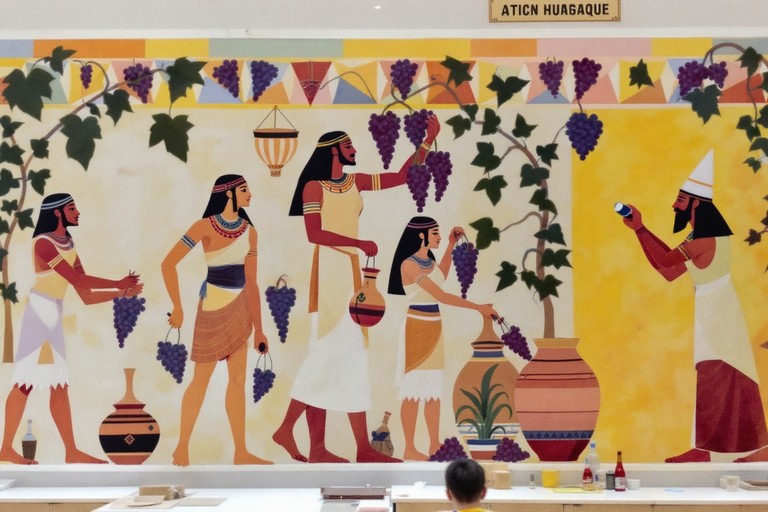
Ancient Egypt is often celebrated for its impressive pyramids and rich cultural heritage. However, it also holds a significant place in the history of viticulture. As early as the first dynasties, Egyptians cultivated grapes and engaged in winemaking, making wine an integral part of their daily and ceremonial life. Viticulture in ancient Egypt dates back to around 3000 B.C. Archaeological excavations have revealed wine jars in pharaohs’ tombs, indicating that wine was reserved for the elites. The wall frescoes of the Beni Hassan tombs offer a colorful testimony of Egyptian wine culture, depicting scenes of grape harvesting, pressing, and fermentation. The hot and dry climate of Egypt posed unique challenges for vine cultivation. Egyptian winemakers developed ingenious techniques to protect their vines from the scorching sun, such as growing the vines in the shade of date palms. The wine of the time was often flavored with herbs and fruits to mask its acidic taste. Egyptians also had unique winemaking methods. Grapes were stomped by foot in large vats, then the juice was collected and placed in jars for fermentation. These jars were often sealed with clay and labeled with the vineyard and the harvest year. The use of sealed jars shows an advanced understanding of the need to preserve wine quality by protecting it from oxidation. Wine held a symbolic place in Egyptian religion. It was often used in funerary rituals to ensure the best possible life in the afterlife. The god Osiris, associated with resurrection and fertility, was also linked to viticulture, thus attesting to the importance of wine in Egyptian culture. Ancient Egypt thus marks one of the first great civilizations to have adopted viticulture, paving the way for the more complex innovations of Greece and Rome that would follow.
Ancient Greece, the land of philosophers and poets, was also an innovative precursor in the field of viticulture. Unlike Egypt, where wine was a luxury product mainly reserved for the elite, Greek culture valued wine as an everyday drink accessible to a wider range of the population. In Greece, viticulture saw its first significant developments around the 8th century B.C. The Greek archipelago and regions surrounding the Aegean Sea offered a unique terroir, composed of volcanic soils and ideal Mediterranean climates for vine cultivation. Thus, the Greeks developed a wide range of grape varieties, some of which still exist today. The Greeks also introduced major innovations in winemaking. The amphora, a clay vessel used for storing and transporting wine, is one of their most notable contributions. These amphoras were often sealed with plaster or resin, another Greek addition, to ensure airtightness and wine conservation. Moreover, the Greeks fermented their wine on the surface, a technique that allowed producing richer and more complex wines. Greek wine was often mixed with water before consumption, a practice that was not only common but also considered a mark of civilization. Greek banquets, or symposia, were social occasions where wine played a central role, accompanied by philosophical discussions and artistic entertainment. This tradition is immortalized in numerous literary and artistic works of the time. The Greeks are also credited with introducing the notion of ‘appellation of origin’. Wines produced in specific regions such as Chios and Thasos were renowned for their quality and were often exported throughout the Mediterranean basin. This flourishing trade allowed the spread of Greek wine culture and established standards of quality and taste. Wine was also deeply rooted in Greek mythology. Dionysus, the god of wine, festivity, and ecstasy, symbolized the spirit of viticulture and wine consumption. Celebrations in his honor, known as Dionysia, gathered the Greeks around the vine, theater, and music. In summary, ancient Greece not only perfected the techniques of viticulture and winemaking but also elevated wine into a true art of living, profoundly influencing the wine practices of later civilizations.

The Roman Empire, with its boundless ambition and vast influence, brought viticulture to new heights of sophistication. The Romans, having inherited Greek practices, refined them and spread them throughout Europe, from Gaul to Hispania and beyond. Roman viticulture thrived between the 1st century B.C. and the 5th century A.D. The Romans were masters of efficiency and innovation, and this was clearly reflected in their winemaking approach. They mapped the best lands for vine cultivation, extracting every ounce of potential from the most fertile soils. Documents such as the writings of Cato the Elder and Virgil offer detailed insights into Roman agricultural methods, including viticulture. The Romans introduced several technical innovations. Large-scale winemaking is one of the most notable. Viticultural estates, often called ‘villae rusticae’, cultivated vast vineyards and produced impressive quantities of wine. To facilitate this process, the Romans perfected the wine press, using screw presses to maximize juice extraction. This was a significant advancement over the previously used manual methods. The Romans also sophisticated the storage and transport of wine. Roman amphoras, derived from Greek models, were more robust and standardized, facilitating trade. Wine was often stored in underground cellars called ‘cellae vinariae’, where temperature and humidity were controlled to promote optimal wine aging. The diversity of Roman wines reflected the impressive scope of the Empire. Regions like Campania, Hispania, and Gaul produced wines renowned for their unique quality. The Romans classified wines according to their origin and production method, thus creating a first form of appellation system. Wine played a central role in Roman culture. Banquets, or ‘convivia’, were social events where wines were tasted and politics, philosophy, and state affairs were discussed. Roman poets, such as Horace, regularly celebrated wine in their works, testifying to its cultural importance. The Romans also used wine for medicinal and culinary purposes. It was often mixed with herbs and spices to create remedies. In cooking, ‘mulsum’, a mixture of wine and honey, was a prized beverage. Roman viticulture is not merely a continuation of Greek and Egyptian traditions; it represents a true leap forward in terms of technique, scope, and cultural refinements. This period of viticultural prosperity influenced European wine regions for centuries, laying the foundations for modern viticulture.
Antiquity, a period of great innovations and enduring traditions, saw the birth of winemaking techniques that have spanned the ages and influenced modern methods. Egypt, Greece, and Rome each made their unique contributions to the art of transforming grapes into wine, thus creating a complex mosaic of know-how and styles. In Egypt, winemaking relied mainly on rudimentary but effective methods. Grapes were first stomped by foot in large vats to extract the juice. This juice was then transferred to clay jars for fermentation. These jars, often sealed with clay, were stored in cool cellars to slow the fermentation process and improve wine preservation. Egyptians often scented their wine with herbs, fruits, and spices, adding a unique aromatic dimension to mask taste imperfections. In Greece, winemaking techniques became more structured and diverse. Greeks used presses to extract grape juice, thus increasing the efficiency of the winemaking process. Fermentation generally took place in amphoras, and these clay vessels played a crucial role in wine storage and transport. The amphoras were sometimes coated with pine resin, giving rise to ‘retsina’, a type of wine that still exists today. Greeks were also pioneers in aging wine, creating more complex and refined wines. In Rome, winemaking reached an unparalleled level of sophistication in antiquity. The Romans perfected the use of screw presses to extract a greater amount of juice and optimize production. Large and well-organized vineyards, often located on hillsides to benefit from the best sunlight and drainage, were typical. The Romans took great care in the fermentation process, using underground cellars to control the temperature and create ideal conditions. They also employed techniques for racking to remove impurities and improve wine clarity. The types of wines produced in antiquity were as varied as the winemaking techniques. In Egypt, wines were often sweet and heavy, flavored with additions of honey, ginger, and other spices. In Greece, there was a wide range of wines, from the sweet wines of Samos to the robust wines of the island of Chios. The Romans produced both red and white wines, with famous varieties such as ‘Falernum’ from Campania, known for its exceptional quality. Thus, the winemaking techniques and types of wines in Egypt, Greece, and Rome demonstrate a rich and diverse array of innovations and styles. Each culture brought its unique touch, refining and perfecting the art of winemaking and leaving a lasting imprint on the history of wine.
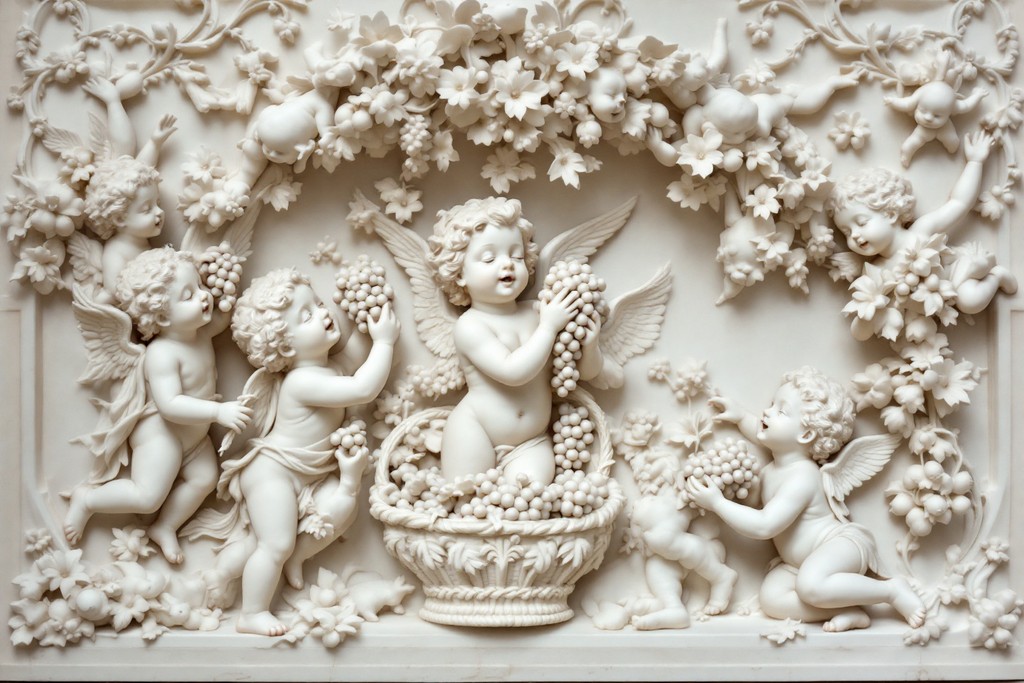
Beyond traditional wines, the Romans also ventured into more experimental creations, including natural sparkling wines. These sparkling wines, although rare and often considered curiosities, testify to the ingenuity and thirst for innovation that characterized Roman viticulture. Effervescence in Roman wines was often a natural phenomenon, resulting from involuntary secondary fermentation. The warm climate of many Roman wine regions could interrupt primary fermentation in winter, to restart it in spring when temperatures increased. This revival of fermentation produced carbon dioxide, thus creating bubbles in the wine. The Romans quickly learned to appreciate this sparkling, albeit random, quality. Historical documents offer fascinating insights into how these sparkling wines were perceived. Pliny the Elder, in his encyclopedia ‘Natural History’, mentions wines ‘that sparkle or foam in the glass’. Although the controlled production technique of sparkling wines had not been developed at that time, the fascination for these unique wines was well present. The production of natural sparkling wines required particular attention to storage conditions. The amphoras used for these wines were often tightly sealed to contain the pressure created by secondary fermentation. This required a deep knowledge of material properties and conservation techniques. The Romans appreciated these sparkling wines especially during feasts and celebrations. The lively and refreshing nature of sparkling wine added a touch of gaiety to opulent banquets and various festivities. These wines were often flavored with herbs and spices to enhance their flavor, thus creating taste experiences as varied as they were innovative. The tradition of sparkling wines largely disappeared after the fall of the Roman Empire, but it left traces in later wine practices. It was not until the 18th century that the Champagne method was perfected in France, reviving controlled sparkling wine production. The natural sparkling wines of the Romans are thus further proof of their rich and varied vinous heritage. They illustrate a remarkable capacity to explore and exploit nature’s whims to create wines that went far beyond the simple norms of the time. By paying homage to this ancient tradition, we can better appreciate the diversity and complexity of the wines we enjoy today.
Necessary cookies are absolutely essential for the website to function properly. This category only includes cookies that ensures basic functionalities and security features of the website. These cookies do not store any personal information.
Any cookies that may not be particularly necessary for the website to function and is used specifically to collect user personal data via analytics, ads, other embedded contents are termed as non-necessary cookies. It is mandatory to procure user consent prior to running these cookies on your website.